
Most cracked walls are cosmetic, but a few signal that the ground or footings under your home are moving. The crack’s width, shape, location and whether it keeps growing tell you which kind you have. Measure and photograph it first. If it looks serious, get an engineer’s diagnosis before anyone fills it. Once the cause is known, a licensed builder can carry out the repair properly, and that order of work is what protects your money.
TL;DR
- Hairline cracks under 1 mm are generally within normal movement. Cracks of 1 to 5 mm should be monitored through a full year of weather, and cracks over 5 mm are significant.
- Stepped brickwork cracks, diagonal cracks from window and door corners, horizontal cracks, bulging walls and sticking doors deserve closer attention than a vertical hairline.
- Do not fill or paint over a crack that is still moving. Australia’s YourHome guide warns that early repairs can make damage worse.
- Excessive movement should be assessed by a civil or structural engineer. The building work that follows is where a builder comes in.
- Keep dated photos and a simple measurement log. They make any assessment faster and more useful.
Table of Contents
- What a crack in a wall is actually telling you
- Reading the crack: width, shape and location
- How to track a crack for a season
- Why filling the crack first can cost you more
- Who diagnoses, and who fixes
- When cracked walls are part of a bigger project
- Costs: what to expect and how to get a fair price
- Perspective
- Planning repairs with a builder
- FAQ
- Sources
What a crack in a wall is actually telling you
A house is never perfectly still. Timber and masonry expand and shrink with temperature and moisture, and the soil under the footings swells and shrinks too. Many cracks are simply the building adjusting.
The trouble is that a crack shows the symptom, not the cause. YourHome, the Australian Government’s guide to sustainable homes, explains that cracking and settlement can be purely cosmetic or can point to a more serious structural problem, and that the crack alone does not establish which. That is why a pattern of observations matters more than any one measurement.
Common causes
YourHome lists the usual suspects: reactive clay that swells when wet and shrinks when dry, unstable or disturbed soil, settlement under poorly prepared footings, trees drying the soil, uneven soil moisture and poor drainage. Victoria’s building regulator, the Victorian Building Authority (VBA), adds eroding sandy soils and tree roots growing under footings to the list of things that move foundations.
In Sydney, this is practical rather than theoretical. Clay soils, sloping blocks, mature street trees and older drainage are all common across the Eastern Suburbs, the North Shore and the Northern Beaches, and any of them can change what the ground does beneath a house.
Reading the crack: width, shape and location
Start with width, because it gives you a first sorting. The VBA’s guide on foundation movement sets out these bands:
| Crack width | What the VBA says | What you do |
|---|---|---|
| Under 1 mm | Generally within normal movement | Note it, photograph it, and move on |
| 1 to 5 mm | Monitor through a full year of weather | Measure and log it each season |
| Over 5 mm | Significant, outside footing-movement tolerances | Arrange an engineer’s assessment |
These bands come from a Victorian regulator, so treat them as a sound guide to the way movement is judged rather than a NSW statutory test. They are a starting point only. Engineering guidance published in 2026 by QED Engineers stresses that width, pattern, location and progression need to be read together, rather than judging structural risk from width alone.
Patterns worth a closer look
The same QED guidance describes a few shapes that carry more meaning than a straight hairline:
- Stepped cracks in brickwork following the mortar joints can indicate that one part of the footing has moved relative to another.
- Diagonal cracks running from the corners of doors and windows reflect stress concentrating at the openings, associated with movement.
- Horizontal cracks in masonry can indicate lateral pressure or wall-tie problems, and call for assessment rather than simply filling.
The VBA also lists bulging walls and sticking or distorted windows and doors as possible signs of foundation movement. If a door that closed fine last summer now jams, that is information, even when the wall crack looks small.
A vertical hairline at a plasterboard joint, or a fine crack above a door in a new extension, is often shrinkage or minor settling. A crack that is wider at the top than the bottom, or that crosses several rooms, is a different conversation.
Where the crack sits
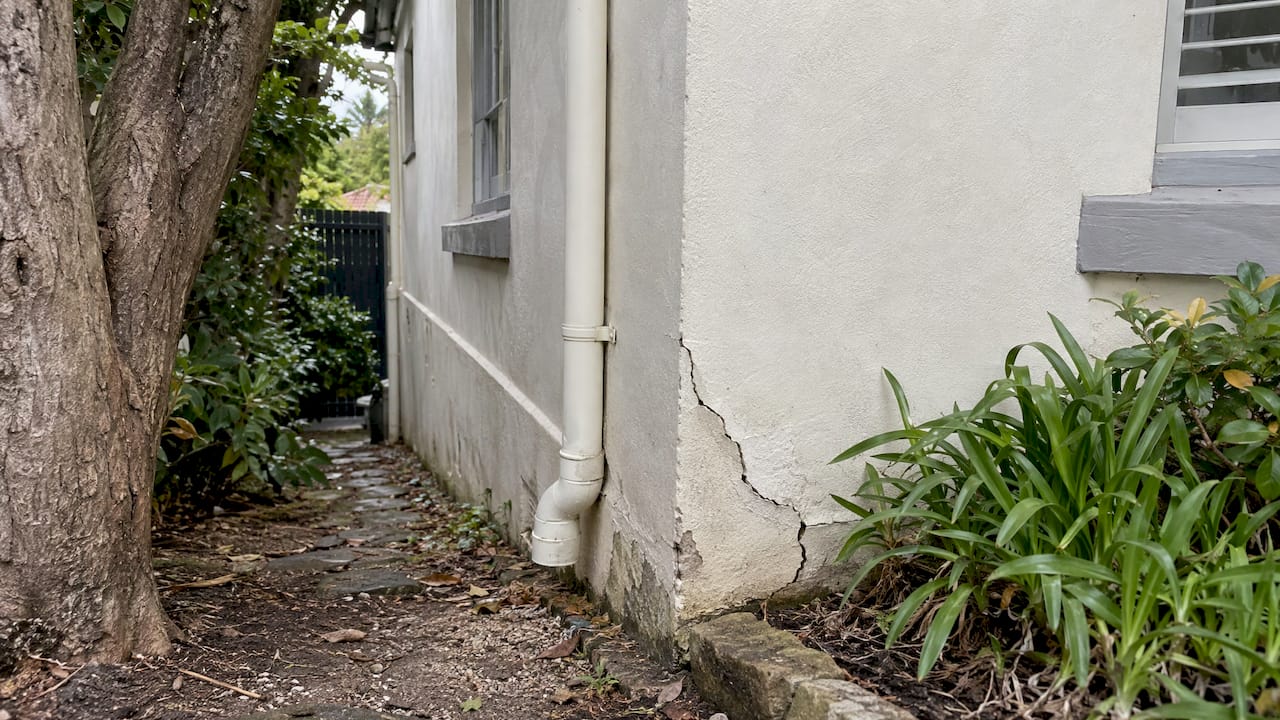
Location adds clues. Cracks near a corner of the house that is close to a large tree suggest soil drying. Cracks beside a downpipe or a low corner suggest drainage. Cracks that line up through floors, walls and ceilings suggest the whole structure is shifting rather than one patch of plaster. Write down which rooms are affected and where the nearest trees, gutters and garden beds are.
How to track a crack for a season
Monitoring is the cheapest and most useful thing a homeowner can do. It turns “I think it’s getting bigger” into evidence.
- Photograph it with a ruler in frame. Use the same position and lighting each time, and include a dated note.
- Measure the width at its widest point. Record it in millimetres, and mark the crack ends in pencil with the date.
- Repeat every few weeks and after heavy rain or a dry spell. The VBA’s advice to watch 1 to 5 mm cracks across a full year exists because soil behaves differently in wet and dry seasons.
- Check doors and windows. Note any that start sticking, or any gaps that open between frames and walls.
- Check outside. Look at the brickwork, the slab edge, paving and the drainage around the house.
If the numbers grow, or you see a stepped, diagonal or horizontal pattern from the start, move to an assessment instead of waiting.
Why filling the crack first can cost you more
This is the part many online guides skip. The quick answer to “can I just paint over it?” is: only if you are sure the wall has stopped moving.
YourHome advises getting an engineer’s advice before doing repairs, because a repair can act like a wedge. When the foundations swell in a later wet or dry season, a rigid patch can resist or redirect the movement and increase the damage. A crack that was telling you something has been hidden, and the movement may simply move to a worse place.
If a crack is a stable hairline, cosmetic filling is reasonable. If it is wider than a millimetre or two, is stepped or diagonal, or is growing, hold off until you understand the cause. A flexible filler suits a crack that will keep opening and closing slightly, but even the right product does not fix a footing problem.
Who diagnoses, and who fixes
The two jobs are separate, and keeping them separate protects you.
Diagnosis belongs to an engineer. The VBA recommends further investigation by an endorsed civil or structural engineer when movement looks excessive. In NSW, look for a qualified structural or geotechnical engineer with experience in residential footings. They can say whether the cause is soil, moisture, a tree, drainage or the structure itself, and they set out what rectification should be. A report also gives you a documented scope you can price against.
If your home is under 10 years old and significant damage appears, the VBA says to contact your builder first. Check the rules and warranty periods that apply in NSW before you do any work yourself.
Rectification belongs to a licensed builder. YourHome describes the kinds of work an engineer may specify: underpinning footings, piering to carry the building on material with similar bearing value, underfloor drainage to even out soil moisture, or sealed control joints where even heave cannot be achieved. These are building jobs, not paint jobs, and they involve structure, access, trades and sequencing.

That is where we work. McArthur Constructions Group is a licensed Sydney building company, and our services include demolition, structural alterations, carpentry, plumbing, waterproofing, tiling and complete renovation project management. When an engineer’s report calls for work on a wall, a floor or an opening, one builder coordinating the trades is easier than managing each one yourself. We also provide a 7-year workmanship warranty on our work.
What a good repair sequence looks like
- Find and document the cause, with an engineer’s advice where movement is significant.
- Address the cause: drainage, trees, moisture, footings or structure.
- Allow the building to settle and confirm the movement has stopped, which may mean more monitoring.
- Repair the cracked wall: rake out, reinforce where specified, fill, then repaint.
- Match finishes so the repair does not show.
Skipping to step 4 is the most common and most expensive shortcut.
When cracked walls are part of a bigger project
A crack assessment sometimes opens up a larger decision. Floors that slope or feel soft often share a cause with wall cracks, and our guide to sagging floor repair covers what that looks like and when to call a builder. If a house has an extension or alteration that has started to crack where old meets new, the junction usually needs structural attention rather than patching, and our notes on home additions and approvals in Sydney explain how that work is planned.
For families already wanting more space, repairs and a renovation can be planned together. It makes sense to fix a wall’s cause once and then renovate on a sound base. Our home renovations and home extension work is built around that kind of sequencing. Where timber is involved, such as door frames, trims and structural framing, our carpentry services cover the repair side.
If the cracks are outdoors, in paving or slabs near the house, the repair approach is similar: identify the cause, then fix. This guide to cracked patio repair options explains what to fill, fix or rebuild once the cause is known.
Costs: what to expect and how to get a fair price
Costs vary enormously. A cosmetic crack repair and repaint is a modest job. Underpinning or drainage work sits at the other end, and the engineer’s scope decides which one you face. The honest way to price it is in two parts: the assessment, then the building work.
For the assessment, ask the engineer what the report will include. For the rectification, give each builder the same engineer’s scope so the quotes compare like for like. A quote that does not mention the cause of the crack is a quote for a patch.
If the work is large, funding matters too. Our overview of home renovation loan options explains how owners commonly pay for projects of this kind.
Perspective
When someone calls us about a cracked wall, the first thing we want to know is not how long the crack is. It is whether it has changed since they first noticed it.
A crack is a piece of evidence. Filling it without understanding it is like turning off a smoke alarm. The wall looks fine for a season, then the same line opens again, and the repair has cost you twice.
The right order is simple. Get the cause diagnosed by an engineer when movement is significant, fix the cause, then rebuild the wall and finishes to a standard that lasts. Good carpentry, careful structural work, correct waterproofing in wet areas and tidy project management are what make that last step hold up. That is how we approach every job, and it is why we stand behind our work with a 7-year workmanship warranty.
McArthur
Planning repairs with a builder
If you have an engineer’s report, or you are weighing up repairs alongside a renovation, we can walk through it with you. We work across the Eastern Suburbs, Lower and Upper North Shore, Northern Beaches and Hills District, from Vaucluse and Mosman to Pymble and Wahroonga.

To discuss the building work your home needs, see our home renovations page or start with our renovation advice page.
FAQ
What causes cracks in walls?
The usual causes are changing soil moisture, reactive clay swelling and shrinking, settlement under footings, tree roots drying the ground, and poor drainage, according to YourHome. Ordinary expansion and shrinkage of building materials also produces fine cracks. The pattern and location of the crack help point to which cause applies.
When should I worry about cracks?
Be concerned when a crack is over 5 mm, is growing, is stepped, diagonal or horizontal, or comes with bulging walls or sticking doors and windows. The VBA treats cracks over 5 mm as significant. Cracks of 1 to 5 mm should be monitored through a full year. If you are unsure, an engineer’s assessment settles it.
Can I just paint over cracks in walls?
Only when you are confident the wall has stopped moving, such as a stable hairline. If the cause is foundation movement, YourHome warns that repairs can act as wedges when the soil swells again and make damage worse. Diagnose first, then repair.
How much does it cost to fix a crack in a wall?
It depends on the cause. A stable cosmetic crack is a small repair and repaint. Cracks caused by footing movement can need engineering advice and structural work such as underpinning or drainage. Get the engineer’s scope first and ask builders to quote against it.
Sources
- Minimising foundation movement and damage to your house, Victorian Building Authority
- Repairs and maintenance, YourHome (Australian Government)
- Cracks in Your Walls: When Are They Structural?, QED Engineers
- Cracked Patio Repair: What to Fill, Fix or Rebuild